Be honest: how many church retreats have you been on that you can barely remember six months later?
The conference room. The breakout sessions. The hotel breakfast buffet. The icebreaker where everyone says their name and a fun fact. It’s fine. It’s safe. And it’s forgettable.
The problem isn’t the intention — pastors pour their hearts into planning retreats. The problem is the format. When you put people in the same environment they’re in every week (chairs, screens, a stage) and expect a different result, you’re fighting against the setting itself.
The most transformative retreats share one thing in common: they move people out of their comfort zone and into an environment where God can reach them differently.
Here’s what that looks like in practice.
Why Most Church Retreats Don’t Stick
Research on adult learning and spiritual formation consistently shows the same thing: transformation happens when the whole person is engaged — mind, body, and spirit. Most retreat formats engage the mind (teaching) and sometimes the spirit (worship), but almost never the body.
Sitting in a conference room listening to a speaker is valuable. But it’s the same posture your congregation is in every Sunday. The brain doesn’t flag it as different. It processes it the same way it processes a sermon — with respect, but without the heightened receptivity that comes from being physically challenged, emotionally vulnerable, and environmentally displaced.
The retreats people remember are the ones where they did something they’d never done before. Where they were uncomfortable. Where the experience itself became the sermon.
Ideas That Actually Work
Get Outside — Way Outside
The most effective church retreats put people in nature. Not a retreat center with a nice courtyard — actual nature. Mountains, rivers, oceans. Environments that remind people how small they are and how big God is.
Backpacking trips, river rafting, horseback riding through canyons, or surfing in the Pacific Ocean. The physical challenge creates an openness that teaching alone can’t produce. When someone is exhausted, exhilarated, and completely out of their element, the walls come down.
Build Something Together
Shared labor creates bonds faster than shared conversation. Whether it’s a Habitat for Humanity build, a community garden project, or a Give Back service day in a local village, the act of working together with your hands changes how people relate to each other.
The best retreat programming includes a service component that isn’t an add-on — it’s woven into the spiritual arc of the week. Serve first, then reflect on what it meant. That’s where the real conversation happens.
Create Physical Anchors
Here’s what most retreats miss: there’s nothing to take home. No physical object that anchors the experience in daily life. The notes from the speaker end up in a drawer. The journal stays half-finished.
The retreats that stick give people something tangible. Their Commission — an artifact hand-inked with the verse that spoke to them most. Every time they see it on their nightstand, they’re transported back to the moment God met them.
Keep It Small
Twelve people is better than fifty. When groups are small enough that everyone knows each other’s name by Day 2, vulnerability accelerates. People share things in a circle of eight that they’d never say in a room of forty.
Small groups also allow leaders to personalize the experience. You know who’s struggling. You know who had a breakthrough. You can speak into someone’s life specifically — not generically.
Make the Schedule Breathe
Over-programming kills retreats. People need unstructured time to process what God is doing. If every hour is filled with an activity, a talk, or a discussion, there’s no room for the Spirit to move in the margins.
The best retreat schedules alternate between structured moments and open space. A morning devotional, then two hours of free time. An afternoon activity, then rest. An evening worship session that has no hard end time. Let the schedule serve the people, not the other way around.
The Surf + Soul Model
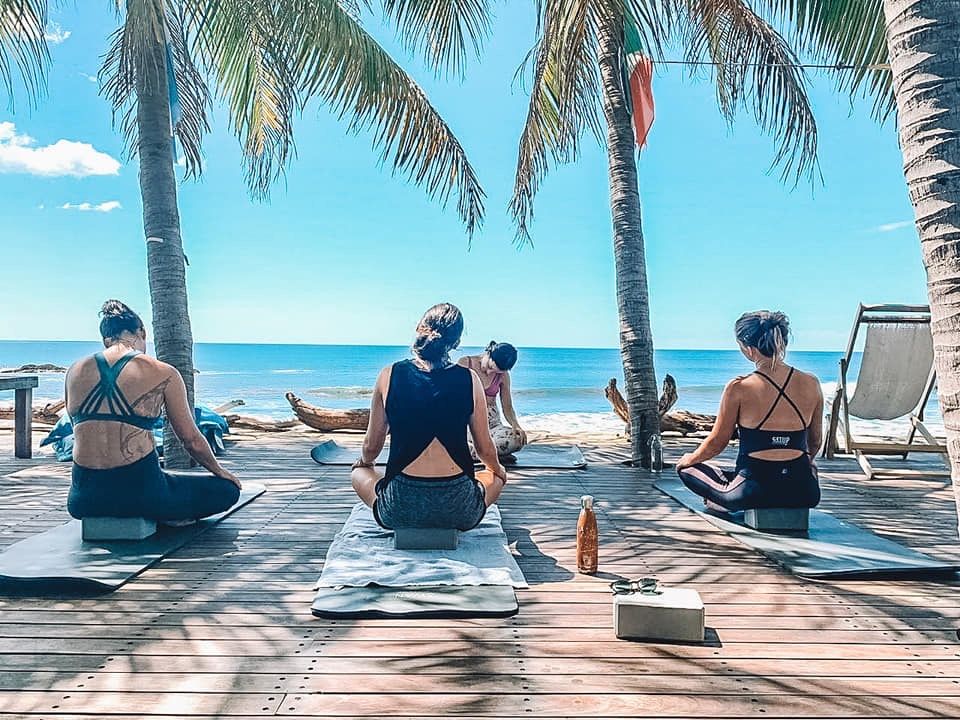
Surf + Soul was built on every one of these principles. Seven days at a private oceanfront retreat in Nicaragua. Maximum twelve guests. Daily surf coaching, Holy Yoga, Soul Sessions, and worship — all woven around a seven-day spiritual arc that moves from Surrender to Commission.
Guests serve the community on Give Back Day. And on Day 7, they receive their Commission — an artifact hand-inked with their chosen verse — during a ceremony that most guests describe as the most meaningful moment of their year.
For partner churches bringing 7 or more guests, Surf + Soul honors your church your way: your pastor’s retreat covered in full, or a 10% giveback on guest fees donated to your church or a charity you choose. No logistics to manage. No venue to book. No catering to coordinate. You promote it, we handle everything, and your church is honored.
The result: your people come home different. And you see it in their faces the next Sunday morning.
The Question Every Pastor Should Ask
Before you book your next retreat, ask yourself: will my congregation remember this in a year? Not “was it good” — was it life-changing? Did it move people from where they were to somewhere new?
If the answer is “probably not,” it might be time to rethink the format entirely.
Learn more about partnering with Surf + Soul at thesurfsoul.com or contact Zane at zane@thesurfsoul.com.
The ocean is our church. Courage is worship. Community is calling.