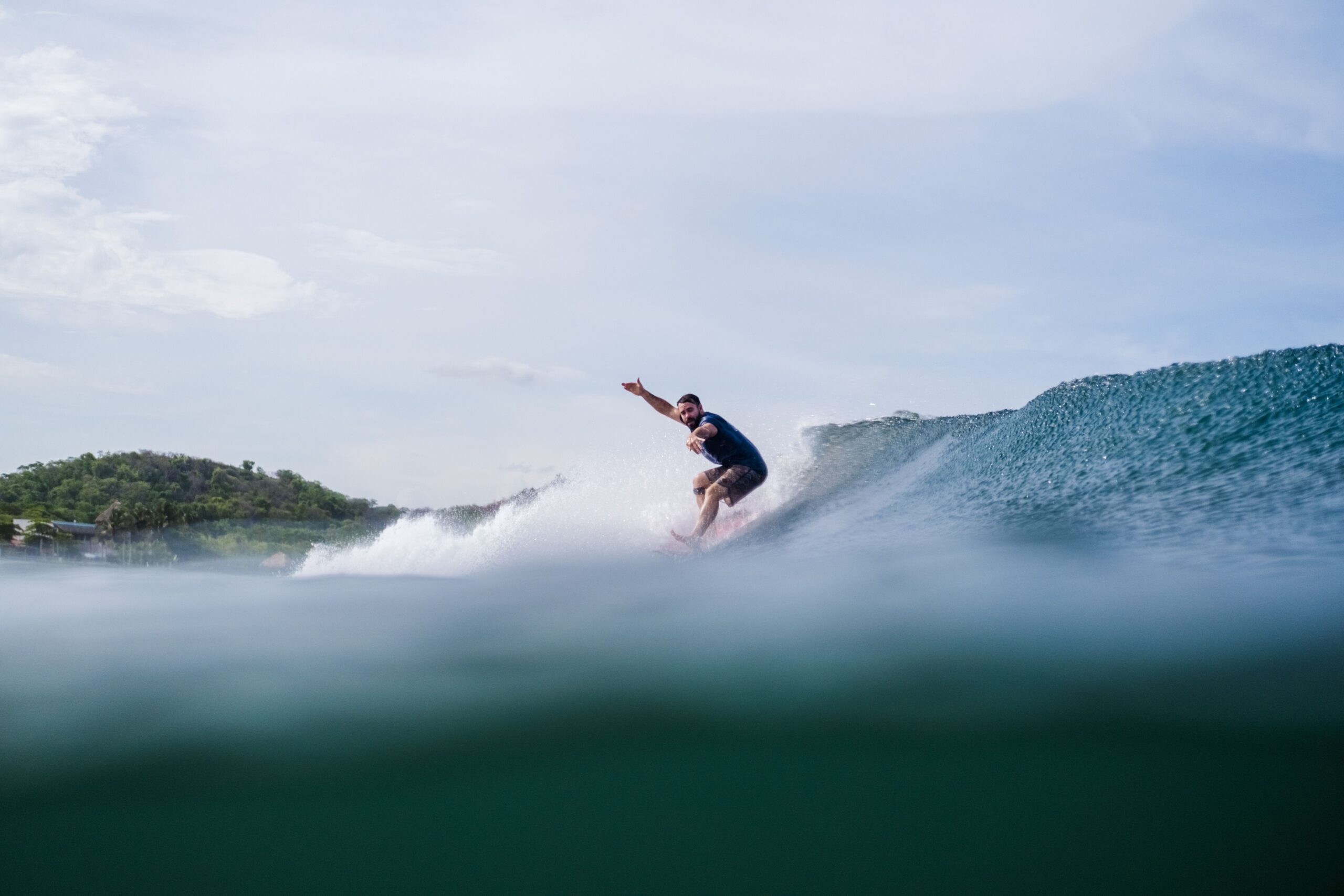
You’ve seen the videos. Tanned twenty-somethings carving perfect waves, making it look effortless. And somewhere in the back of your mind, a voice says: I’d love to try that. But I’m too old. Too out of shape. Too late.
You’re not.
The majority of guests who come to Surf + Soul have never surfed before. Most are between 35 and 55. Some are in great shape. Some haven’t exercised consistently in years. Some are terrified of the ocean. And nearly all of them are standing on a surfboard by Day 2.
Here’s what actually happens when you paddle out for the first time as an adult — no Instagram filter, no highlight reel. Just the truth.
Day 1: It’s Harder Than It Looks (And That’s the Point)
Let’s get this out of the way: surfing is physically demanding. Paddling uses muscles you forgot you had. Your arms will burn. Your shoulders will ache. You’ll swallow saltwater. You’ll get knocked around by waves that seemed small from the beach.
And none of that matters.
Because somewhere in the middle of the chaos — maybe the third or fourth attempt — something shifts. You stop fighting the water and start moving with it. Your guide pushes you into a wave, you feel the board lift, and for two or three seconds, you’re gliding. It doesn’t matter that you fall immediately after. Those three seconds rewire something in your brain.
That’s what Day 1 feels like. Exhausting, humbling, and quietly electric.
Day 2: The Pop-Up
Day 2 is when technique starts clicking. Your surf guide has been watching how you move, adjusting the coaching to your body and your instincts. The pop-up — going from lying on the board to standing — is broken down into steps so simple that your body starts doing it before your brain catches up.
Most first-time adult surfers stand up on Day 2. Not gracefully. Not for long. But they stand. And when it happens, the sound that comes out of you is involuntary — a shout, a laugh, sometimes tears. Because standing on a wave for the first time at 42 or 50 or 58 feels like proof that it’s not too late for anything.
What About My Body?
Here’s the honest truth: you don’t need to be fit to learn to surf. You need to be willing.
The beach breaks where beginners learn — like La Vuelta at Mandla Oceanfront Retreat in Nicaragua — are gentle, warm, and sandy-bottomed. The waves are waist-high. The water is 82 degrees. You’re not being thrown into Pipeline.
Will you be sore? Yes. Your arms, shoulders, lower back, and core will remind you they exist. That’s why a good retreat builds recovery into the schedule — Holy Yoga each morning, afternoon rest time, and a pace that respects your body’s limits.
If you have injuries or medical conditions, a professional surf guide adjusts the coaching. Bad knees? Modified pop-up. Shoulder issues? Shorter paddle sessions with more push-ins. The ocean is surprisingly accommodating when you have the right guide.
The Fear Factor
Most adults aren’t afraid of falling off a surfboard. They’re afraid of looking stupid.
Here’s what nobody tells you: everyone looks stupid when they’re learning to surf. Everyone. The twenty-year-old who’s been skating his whole life looks just as ridiculous on his first wave as the fifty-year-old accountant. The ocean is a great equalizer. It doesn’t care about your job title, your fitness level, or your Instagram following.
At Surf + Soul, the culture around first-time surfing is aggressively encouraging. When someone stands up for the first time, the entire team reacts — cheering, whistling, celebrating. There’s no cool factor to maintain. The only currency in the water is willingness.
The other fear — the ocean itself — is real and worth respecting. But it’s also manageable. Beginner breaks are shallow, calm, and close to shore. Your guide is in the water with you at all times. The buddy system is enforced. And the safety protocols are comprehensive enough that you can focus on the experience instead of the anxiety.
Why It Matters More at 40 Than at 20
Here’s what’s interesting: adults who learn to surf later in life often describe it as more meaningful than younger surfers do. Not because they’re better at it — they’re usually worse. But because they know what it cost them to show up.
At 20, trying something new is expected. At 40 or 50, it’s a choice. You have to override years of comfort, self-protection, and the belief that your best adventures are behind you. Paddling out at 45 is an act of defiance against everything that tells you to play it safe.
That’s why surfing works so well as a spiritual metaphor. Surrender isn’t just a theological concept when you’re lying on a board in the Pacific Ocean. Trust isn’t abstract when you’re waiting for a wave you can’t see yet. Courage isn’t a sermon topic when you’re deciding whether to paddle toward something bigger than you.
The ocean teaches through experience what words often can’t reach. And that teaching hits differently when you’ve lived enough life to know what surrender, trust, and courage actually cost.
What to Look For in a Beginner Surf Retreat
If you’re considering a surf retreat as a first-timer, look for:
- Small group sizes — you want personal coaching, not a crowd
- Warm water — saves energy and reduces intimidation
- Sandy beach breaks — forgiving waves, no reef to worry about
- Professional, certified guides — ISA or equivalent certification
- Recovery built into the schedule — yoga, rest time, space to breathe
- A culture that celebrates beginners — no cool factor, just stoke
Surf + Soul checks every one of these boxes. The retreat is designed for people who have never surfed, and the seven-day arc gives beginners enough time to progress from “what am I doing” to “I can’t believe I just did that.”
The Wave You’ve Been Waiting For
You’re not too old. You’re not too out of shape. You’re not too late. The ocean has been here for billions of years. It’s not going anywhere. And the wave that’s going to change how you see yourself? It’s already out there, rolling toward the shore, waiting for you to decide to paddle.
All you have to do is show up.
Learn more at thesurfsoul.com or contact zane@thesurfsoul.com.
The ocean is our church. Courage is worship. Community is calling.