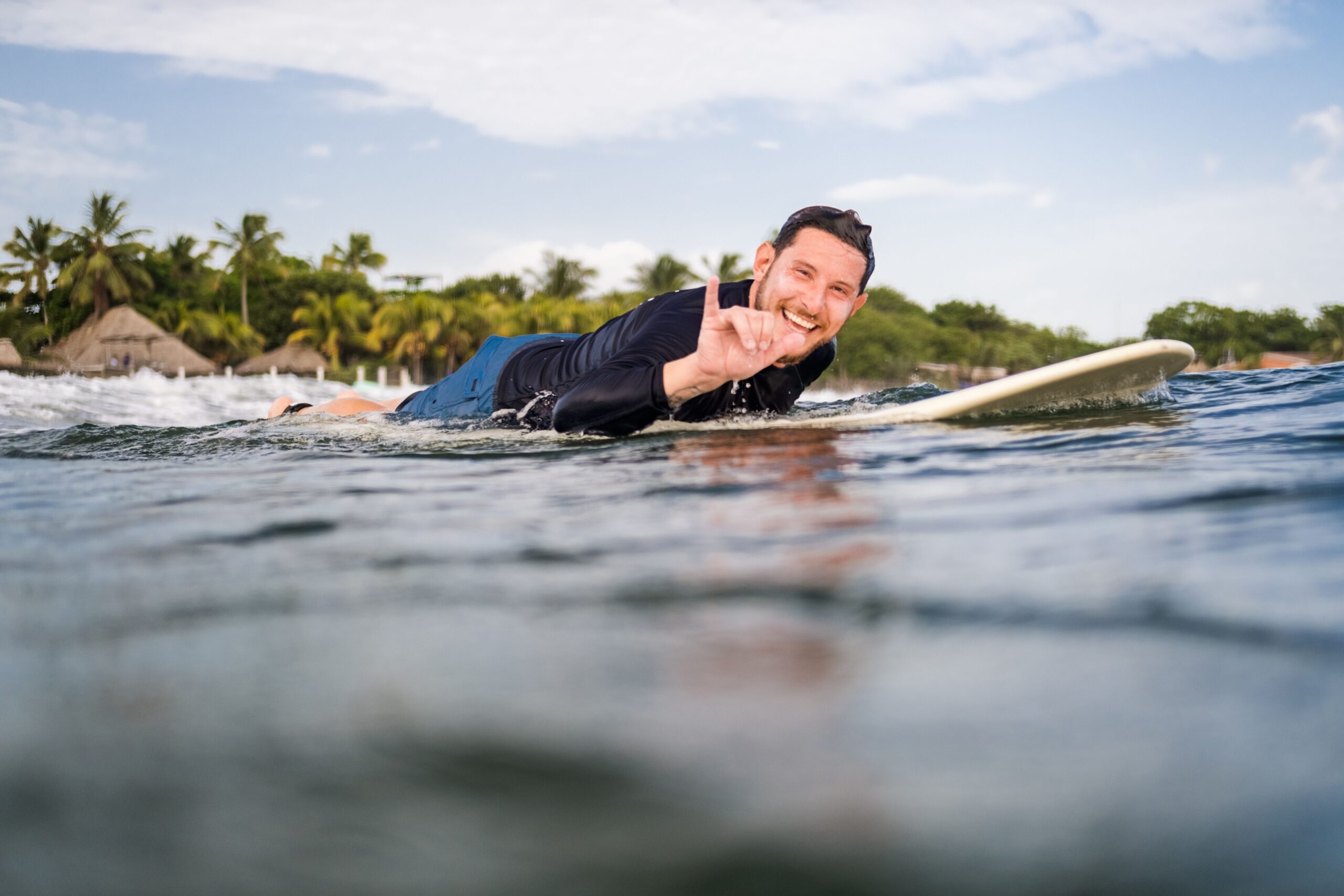
Nicaragua is one of Central America’s best-kept surfing secrets — and it won’t stay secret much longer.
While Costa Rica gets the headlines and crowds, Nicaragua’s Pacific coast offers the same quality waves with a fraction of the people, a lower cost of living, and a raw, authentic charm that more developed surf destinations lost years ago. For surfers of all levels — especially beginners — Nicaragua is quietly one of the best places in the world to learn and progress.
Here’s everything you need to know before you go.
The Waves
Nicaragua’s Pacific coast runs roughly 200 miles from north to south, and nearly all of it catches swell. The coastline is dotted with beach breaks, point breaks, and reef breaks that light up consistently from March through November, with offshore winds most mornings.
Best Breaks for Beginners
Nicaragua is unusually friendly for first-time surfers. The beach breaks along the León coast — particularly around El Tránsito — offer gentle, forgiving whitewater over sandy bottoms. The water is warm year-round (80–84°F), the crowds are thin, and the waves are patient.
El Tránsito’s La Vuelta break is a textbook beginner wave: waist-high, slow-rolling, and close to shore. It’s the kind of wave where you can fall a hundred times without consequence. By Day 2, most first-timers are standing up.
Intermediate and Advanced
As you improve, the same stretch of coast offers increasingly challenging waves. Mainbreak at El Tránsito serves up faster, more powerful faces for surfers ready to progress. And Pistols — a dual-barrel reef break that fires directly in front of Mandla Oceanfront Retreat’s pool — is world-class on its day.
Further south, breaks like Popoyo, Playa Colorado, and Manzanillo draw more experienced surfers chasing overhead barrels. But the beauty of Nicaragua is that you can find uncrowded, high-quality waves at almost any level.
When to Go
Nicaragua is surfable year-round, but the prime season runs from March through October when southern hemisphere swells push consistent waves onto the Pacific coast. March through May tends to be the cleanest, with lighter winds and glassy mornings. June through August brings bigger swells and the beginning of the rainy season — which means afternoon thunderstorms but warmer water and emptier lineups.
The dry season (November through February) still produces surf, but swells are less consistent and the wind can be gusty. Water temperatures stay warm regardless — you’ll never need anything more than boardshorts or a rashguard.
Is Nicaragua Safe?
This is the question everyone asks, and the honest answer is: yes, with normal travel awareness.
El Tránsito is a small, tight-knit Pacific coast surf village. It’s not a tourist hub — it’s a fishing community that happens to have incredible waves. Crime rates are low, the locals are welcoming, and the pace of life is slow and grounded.
That said, standard travel precautions apply. Use private transportation rather than public buses for longer distances. Don’t flash valuables in cities. Stay at established properties with security. And choose a retreat or camp that handles logistics like airport transfers, so you’re not navigating unfamiliar roads alone.
Mandla Oceanfront Retreat, where Surf + Soul operates, is a private gated compound with 24/7 security, night guards, and a comprehensive Emergency Action Plan that includes routes to hospitals in León and Managua, satellite phone access, and CPR/first aid certified staff on-site at all times.
Getting There
Most international flights arrive at Augusto C. Sandino International Airport in Managua. From there, El Tránsito is approximately 90 minutes by car — an easy, scenic drive through the outskirts of León.
Surf + Soul provides private airport transfers for every guest, so the journey from touchdown to toes-in-the-sand is handled completely. For independent travelers, rental cars are available at the Managua airport, and the road to El Tránsito is paved and well-maintained.
What to Bring
Nicaragua’s Pacific coast is casual and warm. Pack light:
- Boardshorts or a swimsuit (you’ll live in these)
- Rashguard for sun protection
- Reef-safe sunscreen (SPF 50+)
- Sandals and one pair of closed-toe shoes
- A light rain jacket (rainy season)
- Hat and sunglasses
- Journal and Bible
- Any prescription medications you need (pharmacies in León carry basics, but bring your own)
You don’t need to bring a surfboard — any reputable retreat will have boards for all levels. You also don’t need surf experience. Nicaragua’s beginner breaks are some of the most forgiving in the world.
Why Nicaragua Over Costa Rica?
No disrespect to Costa Rica — it’s a beautiful country with great waves. But Nicaragua offers something Costa Rica largely lost a decade ago: authenticity, affordability, and space.
The lineups in Nicaragua are uncrowded. The cost of food, transportation, and accommodation is significantly lower. And the surf tourism infrastructure is developing without losing the character that makes the coast special.
For a retreat experience in particular, Nicaragua’s quieter coastline allows for the kind of focused, uninterrupted immersion that busier destinations can’t offer. When you’re trying to encounter God in the water, the last thing you need is a packed lineup and jet ski tours buzzing the break.
The Surf + Soul Experience in Nicaragua
Surf + Soul operates at Mandla Oceanfront Retreat in El Tránsito — an eight-casita private compound directly on the beach. The property sits in front of three distinct breaks: La Vuelta for beginners, Mainbreak for intermediates, and Pistols for advanced surfers. Over 300 offshore days per year means conditions are consistently excellent.
Every week includes professional surf coaching, Holy Yoga, morning devotionals, Soul Sessions, Give Back Day, and The Commission. All-inclusive from $6,750 per person. Everything handled.
Whether you’ve surfed your whole life or you’ve never touched a board, Nicaragua — and Mandla — is the kind of place that changes how you see the ocean, your faith, and yourself.
Learn more at thesurfsoul.com.
The ocean is our church. Courage is worship. Community is calling.